Use environment variables in solutions Power Apps . Web Create an environment variable in a solution. Sign in to Power Apps (make.powerapps.com), and then on the left pane select Solutions. Open the solution you want or create a new one. On the command bar, select New > More, and then.
Use environment variables in solutions Power Apps from never-stop-learning.de
Web Benefits of using environment variables: No need to manually edit other solution components in a production environment. Configure one or more variables in.
Source: never-stop-learning.de
Web Step 1: Generate the deployment settings file Step 2: Get the connection reference and environment variable information Step 3: Update the values in the.
Source: user-images.githubusercontent.com
Web From the Solutions area, select a solution to view all of its components. You can browse through all the components in a solution by scrolling through the items..
Source: bnerdonline.files.wordpress.com
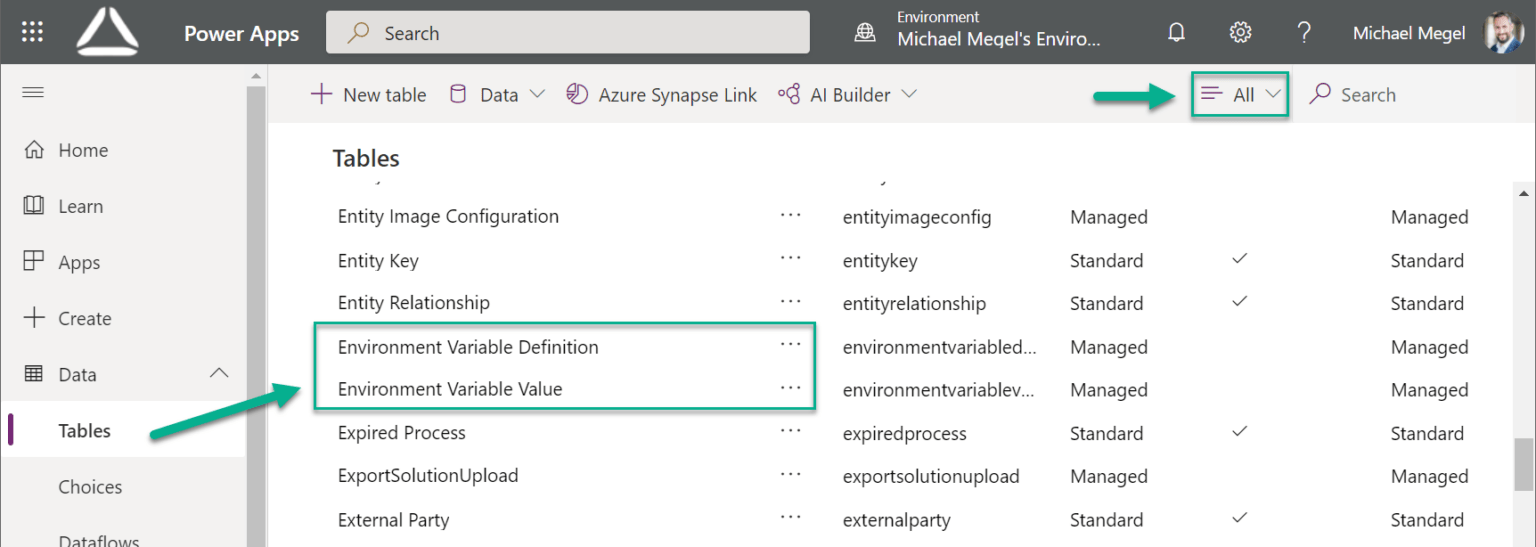
Web Add the "Environment Variables Values" CDS Entity to you App's data source Set the value of the text of the label to be: LookUp ('Environment Variable.
Source: user-images.githubusercontent.com
Web Create a SharePoint list (name it as AppSettings) with a column for each variable you want to configure. For example, "Server", "Version", "Url", etc. 2. Add a.
Source: i.ytimg.com
WebPowerapps environment variables Is very important concept. Whenever we work on application and it uses SharePoint as a Database, Once our development work is done,.
Source: www.ssw.com.au
Web Or, if you need to create a new custom connector in a solution, go to Create custom connectors in solutions. Select the newly created or existing solution from the.
Source: user-images.githubusercontent.com
Web Go to https://make.powerapps.com or https://flow.microsoft.com Go to Solutions and create a new solution. Create a new Environment variable and name it.
Source: bnerdonline.files.wordpress.com
Web The solution to my problem was to set the text on the label to be: LookUp('Environment Variable Values', 'Environment Variable Definition'.'Schema.
Source: 1.bp.blogspot.com
Web Create an environment variable in a solution. Sign in to Power Apps (make.powerapps.com), and then on the left pane select Solutions. Open the solution.
Source: never-stop-learning.de
Web I found out the solution, earlier I removed the env var from solution directly but that is not the correct way. The good way is select env var->EDIT->Current value->.
Source: 1.bp.blogspot.com
Web Go to https://make.powerapps.com or https://flow.microsoft.com Go to Solutions and create a new solution. Create a new Environment variable and name it.
Source: user-images.githubusercontent.com
Web Environment Variables are there to help solve the challenge of data that needs to be different for each environment. The most common pattern for this a DEV,.
Source: user-images.githubusercontent.com
Web To fix dependency issues, go back to your source environment and add the dependencies to your solution and export it again. You can view dependencies at the.
0 komentar